
Insulă zburătoare cu magneţi: fantezie sau certitudine?

Insulă zburătoare cu magneţi: fantezie sau certitudine?

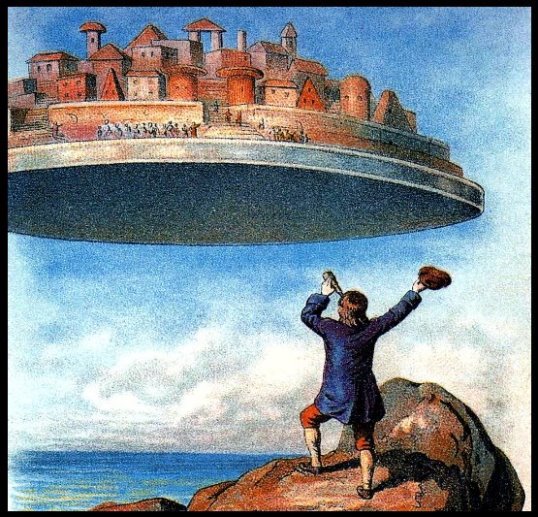
Romanul „Călătoriile lui Gulliver” scris de Jonathan Swift acum trei secole prezintă o imagine impresionantă a „Insulei zburătoare” a Laputei. În această a treia călătorie a căpitanului Gulliver, pasajele descriu în detaliu această insulă și modul în care este controlată de locuitorii săi.

Insula este descrisă ca un corp uriaș și opac, care se apropie de Gulliver și Soare. Este făcută dintr-o substanță solidă, iar fundul său este neted și radiant, reflectând marea de dedesubt. Gulliver observă o mulțime de oameni mișunând pe suprafața înclinată a insulei. Acești oameni folosesc un magnet pentru a ridica, coborî sau deplasa insula dintr-un loc în altul. Dacă magnetul este așezat cu capul care atrage înspre Pământ, insula coboară, iar dacă capul care respinge este îndreptat în înjos, insula se ridică imediat. Mișcarea insulei este oblică atunci când poziția magnetului este oblică.

Această idee năstrușnică a insulei zburătoare și a modului în care este controlată cu ajutorul unui magnet sofisticat poate părea pură fantezie. Cu toate acestea, există numeroase relatări și mituri din trecut care descriu nave aeriene și obiecte zburătoare. În epopeea indiană „Ramayana”, eroii participă la „zboruri aeriene” cu ajutorul unor nave numite vimanas. De asemenea, scrieri grecești și romane menționează „nave aeriene” observate în Grecia și Roma arhaic. Există și cronicile medievale care relatează întâmplări similare, cum ar fi apariția unei corăbii misterioase super unui oraș norvegian în secolul al IX-lea.

Aceste relatări, cu care Swift ar fi putut fi familiarizat, descriu în principal corăbii obișnuite care zboară. Cu toate acestea, în romanul său, Swift a ales să prezinte insula zburătoare jos forma unui cerc sau disc. Această alegere poate fi inspirată de relatări despre „scuturi” sau „mingi” zburătoare care străluceau și erau observate pe cer. De exemplu, în anul 217 î.Hr., au fost observate „scuturi” strălucitoare pe cerul localității Alpi din Italia. În volumul al doilea al „Istoriei naturale”, Plinius relatează că în anul 100 î.Hr., un „scut” radiant a trecut pe cer de la răsărit la apus. Există și alte relatări similare în cronicile medievale.

Astfel, se poate presupune că fantezia lui Swift s-a inspirat din aceste materiale, indiferent de fenomenul adevărat care a avut loc. Relatările originale despre „corăbii zburătoare” pot fi atribuite mirajelor, iar obiectele zburătoare luminoase de formă ovală ar putea fi bolizi uriași sau alte fenomene naturale.

În ceea ce privește secretul „motorului magnetic” al Laputei, acesta poate fi inspirat din lucrarea fizicianului englez William Gilbert „Despre magneți și corpuri magnetice”. Gilbert susține că întreaga masă a Pământului este un magnet uriaș, iar sateliții sunt magneți mai mici atrași de acesta. Astfel, ideea unei inimi magnetice în Laputa poate fi considerată o extindere a acestei teorii.

În concluzie, romanul „Călători
Vino și explorează conținutul generat de inteligența artificială pe dbnews.ro și lasă-te uimit de potențialul acestei tehnologii. Este viitorul conținutului, disponibil chiar acum la un click distanță!

Lasă un răspuns

Adresa ta de email nu va fi publicată. Câmpurile obligatorii sunt marcate cu *

We use cookies to personalise content and ads, to provide social media features and to analyse our traffic. We also share information about your use of our site with our social media, advertising and analytics partners. View more
Cookies settings
Accept
Decline
Privacy & Cookie policy
Privacy & Cookies policy
Cookie name Active

Who we are

Suggested text: Our website address is: http://1db.ro.

Comments

Suggested text: When visitors leave comments on the site we collect the data shown in the comments form, and also the visitor’s IP address and browser user agent string to help spam detection. An anonymized string created from your email address (also called a hash) may be provided to the Gravatar service to see if you are using it. The Gravatar service privacy policy is available here: https://automattic.com/privacy/. After approval of your comment, your profile picture is visible to the public in the context of your comment.

Media

Suggested text: If you upload images to the website, you should avoid uploading images with embedded location data (EXIF GPS) included. Visitors to the website can download and extract any location data from images on the website.

Cookies

Suggested text: If you leave a comment on our site you may opt-in to saving your name, email address and website in cookies. These are for your convenience so that you do not have to fill in your details again when you leave another comment. These cookies will last for one year. If you visit our login page, we will set a temporary cookie to determine if your browser accepts cookies. This cookie contains no personal data and is discarded when you close your browser. When you log in, we will also set up several cookies to save your login information and your screen display choices. Login cookies last for two days, and screen options cookies last for a year. If you select "Remember Me", your login will persist for two weeks. If you log out of your account, the login cookies will be removed. If you edit or publish an article, an additional cookie will be saved in your browser. This cookie includes no personal data and simply indicates the post ID of the article you just edited. It expires after 1 day.

Embedded content from other websites

Suggested text: Articles on this site may include embedded content (e.g. videos, images, articles, etc.). Embedded content from other websites behaves in the exact same way as if the visitor has visited the other website. These websites may collect data about you, use cookies, embed additional third-party tracking, and monitor your interaction with that embedded content, including tracking your interaction with the embedded content if you have an account and are logged in to that website.

Who we share your data with

Suggested text: If you request a password reset, your IP address will be included in the reset email.

How long we retain your data

Suggested text: If you leave a comment, the comment and its metadata are retained indefinitely. This is so we can recognize and approve any follow-up comments automatically instead of holding them in a moderation queue. For users that register on our website (if any), we also store the personal information they provide in their user profile. All users can see, edit, or delete their personal information at any time (except they cannot change their username). Website administrators can also see and edit that information.

What rights you have over your data

Suggested text: If you have an account on this site, or have left comments, you can request to receive an exported file of the personal data we hold about you, including any data you have provided to us. You can also request that we erase any personal data we hold about you. This does not include any data we are obliged to keep for administrative, legal, or security purposes.

Where your data is sent

Suggested text: Visitor comments may be checked through an automated spam detection service.
Save settings
Cookies settings