
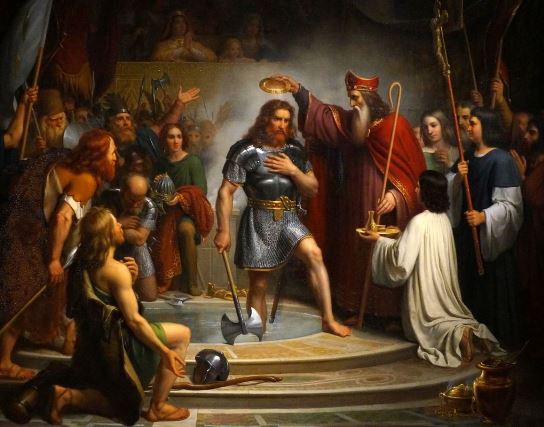
Misterul merovingienilor: sânge supranatural în regii Franţei?

Misterul merovingienilor: sânge supranatural în regii Franţei?

Dagobert al II-lea a fost ultimul rege al dinastiei merovingiene care a condus Franța în Evul Mediu timpuriu. După moartea tatălui său, puterea dinastiei a fost contestată și Dagobert a fost trimis la o mănăstire în Slane, Irlanda. Aici, în anul 666, s-a căsătorit cu prințesa celtă Matilda, care a murit în timpul nașterii celei de-a treia fiice a lor. În anul 670, Dagobert s-a recăsătorit cu Giselle de Razes, fiica contelui de Razes și nepoata unui rege vizigot celebru. Ceremonia religioasă a avut loc la Rennes-le-Chateau, reședința miresei și capitala fiefului de familie.

Povestea vieții lui Dagobert al II-lea este diminutiv cunoscută, iar puține surse documentare menționează numele său. Una dintre aceste surse este „Viața lui Wilfred”, scrisă în secolul al VIII-lea. Lipsa informațiilor sugerează că atât descendenții merovingienilor, cât și cei ai carolingienilor au preferat să păstreze tăcerea în legătură cu acest episod. Carolingienii aveau planuri de a pune capăt dinastiei merovingiene odată cu Dagobert al II-lea. În data de 23 decembrie 674, regele a fost ucis în timpul unei vânători în pădurea din nordul reședinței regale de la Stenay.

Merovingienii franci făceau parte din valul de popoare barbare care au migrat spre vest datorită presiunii hunilor din Asia Centrală. Originea și istoria merovingienilor sunt învăluite în mister și legende. Regii merovingieni susțineau că sunt urmașii regelui Clodio. Potrivit legendei, regina a fost impregnată de două ori, prima dată de rege și a doua oară de o creatură marină numită „chinotaur”. Copilul născut din această uniune a avut sânge regal și sângele creaturii marine. Numele băiatului era Merovee / Merovech.

Merovingienii credeau că au puteri tămăduitoare și că pot vindeca prin așezarea mâinilor ridicat bolnavului, la fel ca esenienii și Iisus, ale cărui vindecări miraculoase sunt menționate în Evanghelii. De asemenea, ei credeau că puterea lor rezidă în păr, motiv pentru care nu îl tăiau niciodată. Această credință era similară cu cea a lui Samson din Biblie, ale cărui puteri erau legate de păr. Părul era și o trăsătură distinctivă a lui Iacob, fratele lui Iisus, considerat sfânt de către Eusebiu. Astfel, merovingienii doreau să fie regi-sacerdoți cu capacități supranaturale, asemenea lui Iisus. Clovis, nepotul lui Merovee și fondatorul dinastiei merovingiene, a fost cel care i-a supus pe vizigoți.

În concluzie, merovingienii au fost o dinastie misterioasă și puternică care a condus Franța în Evul Mediu timpuriu. Originea lor și puterile lor supranaturale au fost subiectul multor legende și speculații. Cu toate acestea, puține surse documentare menționează existența lor și detalii despre viața lor.

Vino și explorează conținutul generat de inteligența artificială pe dbnews.ro și lasă-te uimit de potențialul acestei tehnologii. Este viitorul conținutului, disponibil chiar acum la un click distanță!

Lasă un răspuns

Adresa ta de email nu va fi publicată. Câmpurile obligatorii sunt marcate cu *

We use cookies to personalise content and ads, to provide social media features and to analyse our traffic. We also share information about your use of our site with our social media, advertising and analytics partners. View more
Cookies settings
Accept
Decline
Privacy & Cookie policy
Privacy & Cookies policy
Cookie name Active

Who we are

Suggested text: Our website address is: http://1db.ro.

Comments

Suggested text: When visitors leave comments on the site we collect the data shown in the comments form, and also the visitor’s IP address and browser user agent string to help spam detection. An anonymized string created from your email address (also called a hash) may be provided to the Gravatar service to see if you are using it. The Gravatar service privacy policy is available here: https://automattic.com/privacy/. After approval of your comment, your profile picture is visible to the public in the context of your comment.

Media

Suggested text: If you upload images to the website, you should avoid uploading images with embedded location data (EXIF GPS) included. Visitors to the website can download and extract any location data from images on the website.

Cookies

Suggested text: If you leave a comment on our site you may opt-in to saving your name, email address and website in cookies. These are for your convenience so that you do not have to fill in your details again when you leave another comment. These cookies will last for one year. If you visit our login page, we will set a temporary cookie to determine if your browser accepts cookies. This cookie contains no personal data and is discarded when you close your browser. When you log in, we will also set up several cookies to save your login information and your screen display choices. Login cookies last for two days, and screen options cookies last for a year. If you select "Remember Me", your login will persist for two weeks. If you log out of your account, the login cookies will be removed. If you edit or publish an article, an additional cookie will be saved in your browser. This cookie includes no personal data and simply indicates the post ID of the article you just edited. It expires after 1 day.

Embedded content from other websites

Suggested text: Articles on this site may include embedded content (e.g. videos, images, articles, etc.). Embedded content from other websites behaves in the exact same way as if the visitor has visited the other website. These websites may collect data about you, use cookies, embed additional third-party tracking, and monitor your interaction with that embedded content, including tracking your interaction with the embedded content if you have an account and are logged in to that website.

Who we share your data with

Suggested text: If you request a password reset, your IP address will be included in the reset email.

How long we retain your data

Suggested text: If you leave a comment, the comment and its metadata are retained indefinitely. This is so we can recognize and approve any follow-up comments automatically instead of holding them in a moderation queue. For users that register on our website (if any), we also store the personal information they provide in their user profile. All users can see, edit, or delete their personal information at any time (except they cannot change their username). Website administrators can also see and edit that information.

What rights you have over your data

Suggested text: If you have an account on this site, or have left comments, you can request to receive an exported file of the personal data we hold about you, including any data you have provided to us. You can also request that we erase any personal data we hold about you. This does not include any data we are obliged to keep for administrative, legal, or security purposes.

Where your data is sent

Suggested text: Visitor comments may be checked through an automated spam detection service.
Save settings
Cookies settings